
Building Nations.
Transforming Africa.
Strategic Zones
Regions with initiatives in preparation
The Nation Building Project is a comprehensive national development platform designed to connect infrastructure, industrialization, technology, human capital and investment within one coordinated transformation framework.
Working nation by nation across Africa, NBP structures development priorities into practical programs and investable projects capable of strengthening productivity, expanding employment, improving essential services and building competitive industries.
Development cannot continue in silos.
A synchronized, multi-sectoral approach is required to build a self-sustaining economy. The framework integrates critical domains so that progress in one compounds progress in the others.
The National Opportunity
A continent rich in potential. A development system built to unlock it.
Africa holds the world’s youngest population, roughly two-thirds of the world’s remaining uncultivated arable land, substantial hydro, solar and mineral resources, and a continental free-trade area covering fifty-four states.
The opportunity is to connect these strengths through coordinated infrastructure, productive industries, modern public services, technology, skills and investment. NBP provides a framework for transforming isolated opportunities into integrated development programs.
Development Challenges
Transforming structural challenges into development opportunities
Each constraint below is stated alongside the mechanism that addresses it. Naming a challenge precisely is what makes it solvable.
Infrastructure gaps
Network coverage has not kept pace with population and economic growth. Sequencing investment by economic return, rather than addressing gaps in isolation, is what converts spending into productivity.
Logistics costs
Freight moves in small consignments over long distances, which raises delivered prices. Consolidation at well-sited hubs is the established mechanism for reducing that cost.
Electricity reliability
Interruptions push enterprises toward private generation, which costs more per unit. Reliability improvements therefore lower industrial costs directly.
Limited local processing
Agricultural and mineral output is largely exported unprocessed. Processing capacity sited near production retains both value and employment regionally.
Post-harvest losses
A significant share of perishable production is lost between harvest and market. Storage and cold chain address this at lower cost than raising production volumes.
Urban congestion
Journey times in the principal cities reduce effective access to employment and raise costs for commercial traffic. Corridor-based transit addresses both.
Housing pressure
Formal supply trails urban growth, so settlement occurs where services are absent. Planning serviced land ahead of demand is cheaper than retrofitting it.
Skills alignment
Training capacity and employer requirements are not consistently matched. Curricula developed alongside employers close that gap.
Healthcare accessibility
Regional facilities constrained by power, diagnostics and equipment servicing push patients toward already-loaded urban hospitals.
Digital service fragmentation
Public systems procured separately do not exchange data, so citizens re-submit the same information. An interoperability layer resolves this without replacing systems.
Project preparation constraints
Good concepts stall for want of feasibility, environmental and structuring work. Preparation is the binding constraint on investment more often than capital availability.
Long-term project finance
Infrastructure requires tenor that domestic markets supply in limited volume. Blended and development finance structures can bridge this where projects are properly prepared.
The NBP Transformation Model
From diagnosis to measured, scalable delivery
Ten stages. A program advances when the evidence for the next stage exists — never because it looks ready.
Diagnose
Use evidence to understand development constraints and opportunities.
Prioritize
Identify interventions capable of producing strategic economic and social value.
Design
Convert priorities into coordinated programs.
Prepare
Complete technical, financial, environmental and institutional studies.
Structure
Determine delivery, ownership, financing and partnership models.
Finance
Match suitable projects with public, private and development capital.
Deliver
Manage procurement, construction, commissioning and implementation.
Operate
Establish sustainable operational and maintenance systems.
Measure
Track outcomes through transparent performance indicators.
Scale
Replicate proven models from the market that proved them to the next market that needs them.
Flagship Initiatives
The programmes anchoring the national portfolio, at their current stage of preparation.
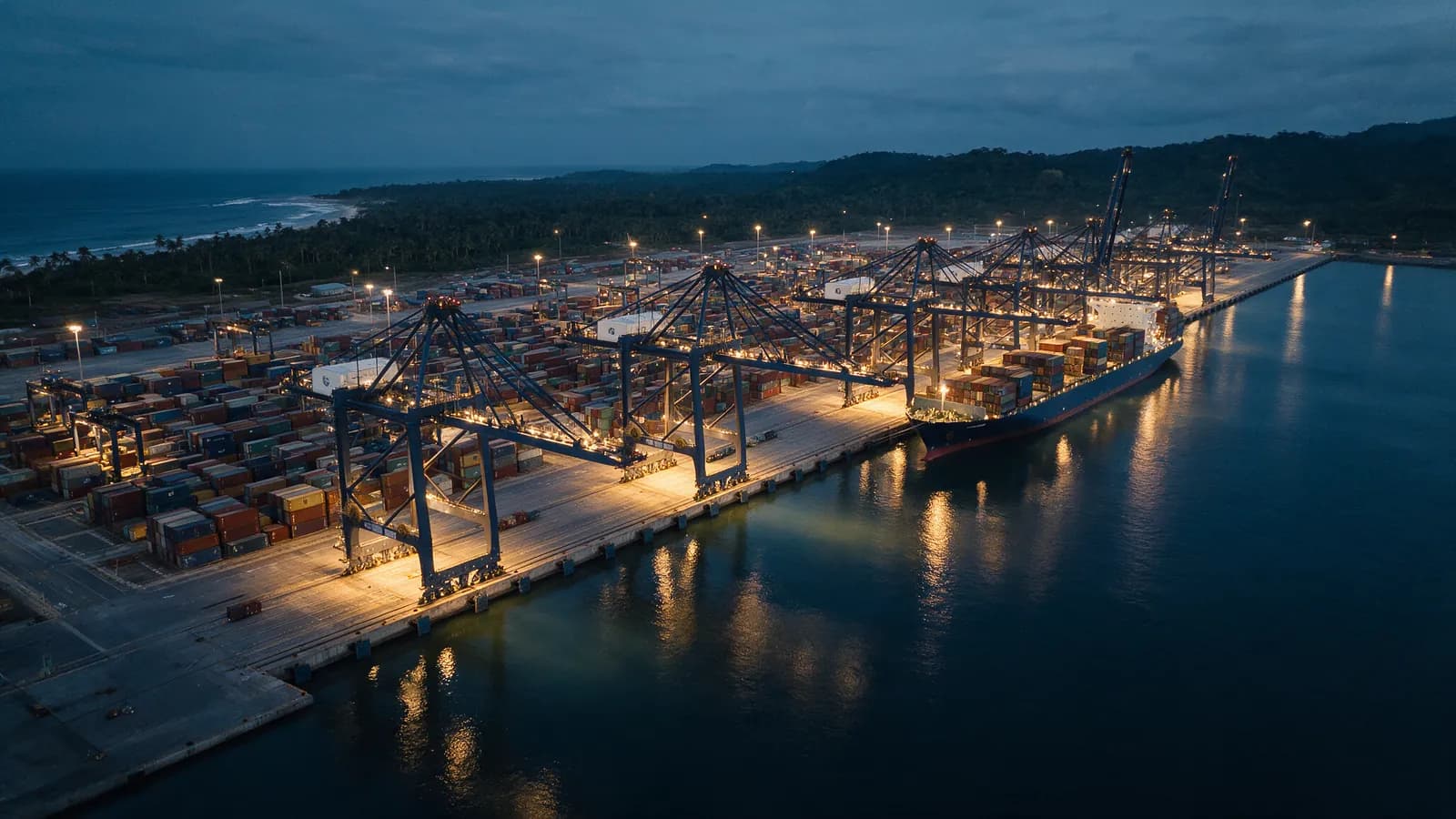 NBP-2Concept Visualization
Infrastructure · Gulf of Guinea
Deep-Water Port, Industrial & Logistics Development Program
A port-linked industrial and logistics development opportunity at Africa’s deep-water gateways, examining how deep-water access can support processing, warehousing and regional trade.
Capital requirement
Not yet established
Readiness
NBP-2
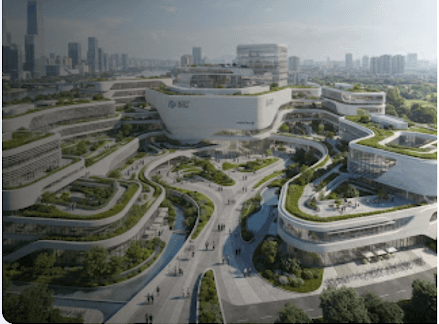 NBP-2Concept Visualization
Urban Development · Atlantic seaboard
Coastal Gateway City Transformation Program
An integrated urban program template for Africa’s coastal gateway cities — the port metropolises that carry the bulk of a country’s trade — addressing mobility, drainage, waste, water, lighting and digital services as one coordinated system.
Capital requirement
Not yet established
Readiness
NBP-2
Partner with NBP
Development requires coordination, preparation and capital in the same room.
NBP works with governments, development finance institutions, industry and technical partners to prepare programs to the standard institutional capital can assess. We do not claim to develop a nation alone — that is the work of partnership.